


Description
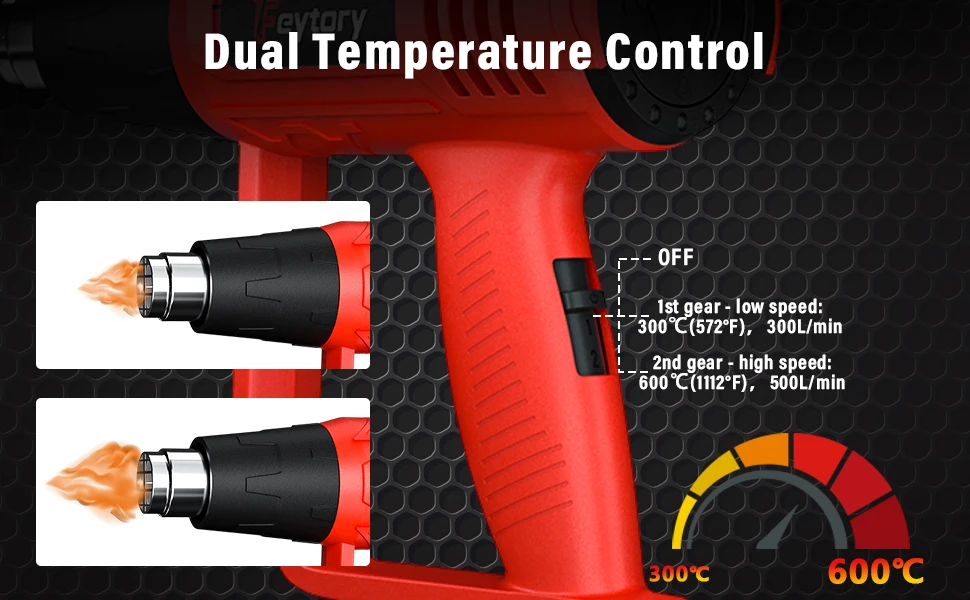
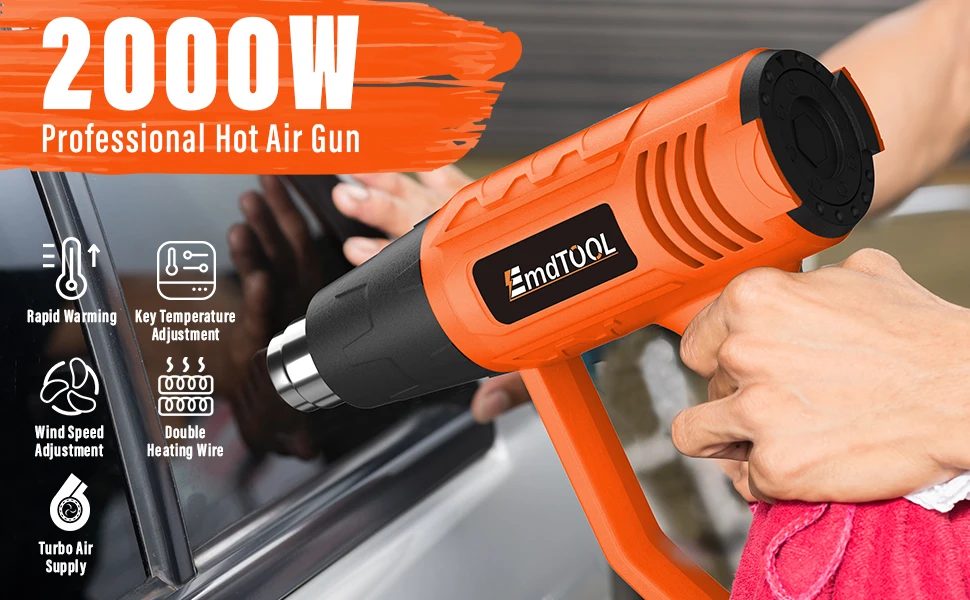
Heat is the universal solvent. It releases seized bolts, reshapes thermoplastics, strips paint faster than any chemical, and reactivates the adhesives that hold modern electronics together. The Thermal Lance delivers 2000 watts of precisely directed thermal energy at two distinct operating temperatures — 300°C for controlled material work and 600°C for aggressive removal — because the difference between softening vinyl wrap and carbonizing it is exactly the kind of control that a single-setting heat gun cannot provide.
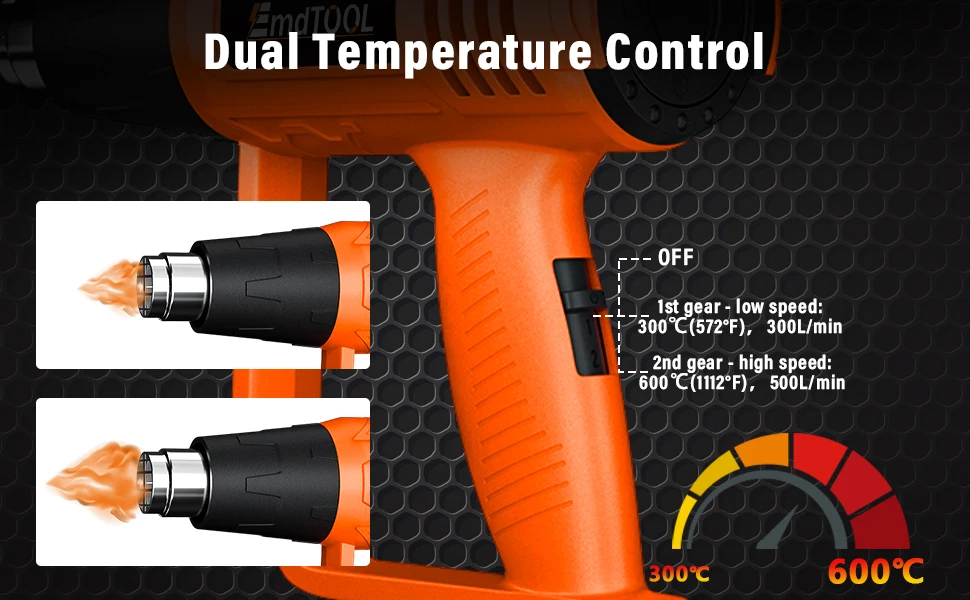
The 300-500 L/min airflow specification is the spec that separates professional heat guns from hobbyist hair dryers. At 500 L/min, the volume of heated air passing through the nozzle creates a working zone large enough to strip a door panel in minutes rather than hours. At 300 L/min, the reduced flow increases dwell time for precision work — heat-shrink tubing, SMD reflow, and the kind of delicate plastic forming where too much air movement cools the target faster than the element can heat it. The dual-temperature switch is not a marketing bullet point. It is the operational difference between a tool you reach for and a tool you keep in the drawer because it damages more than it fixes.
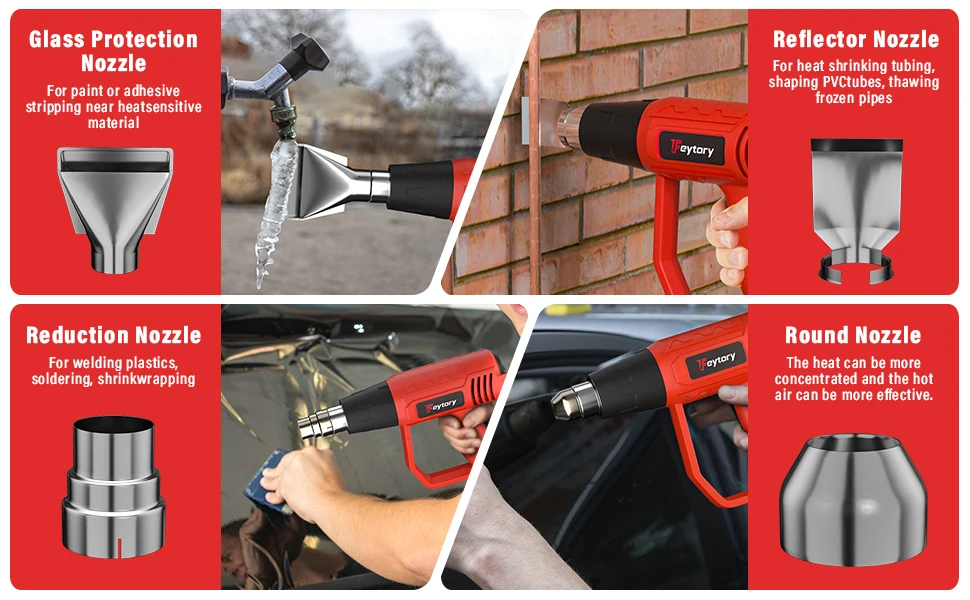
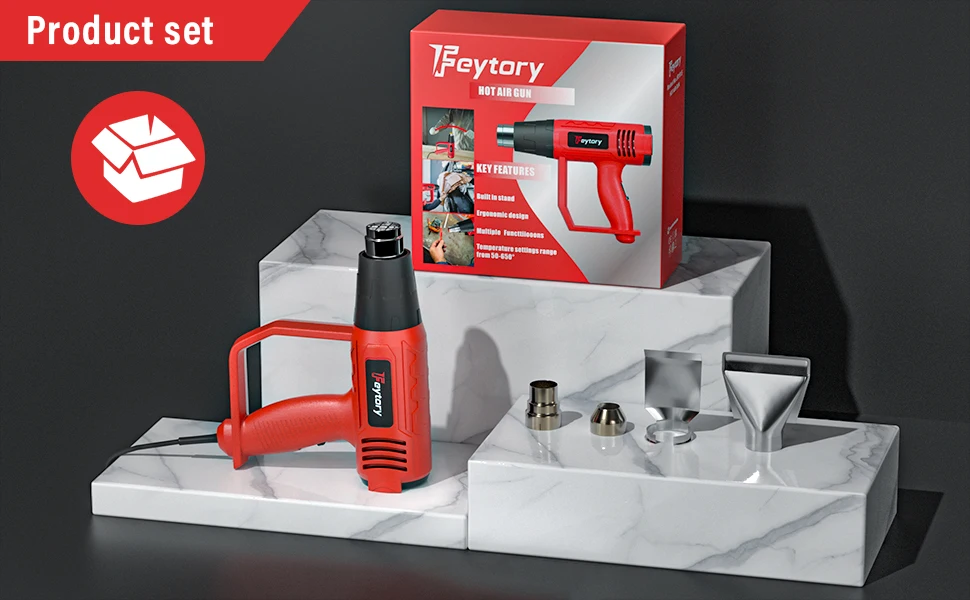
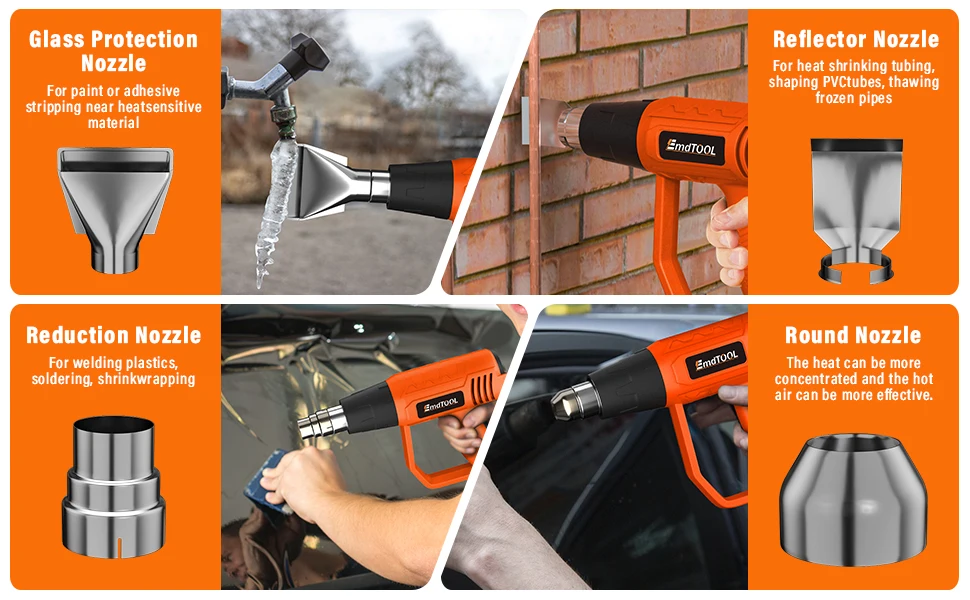
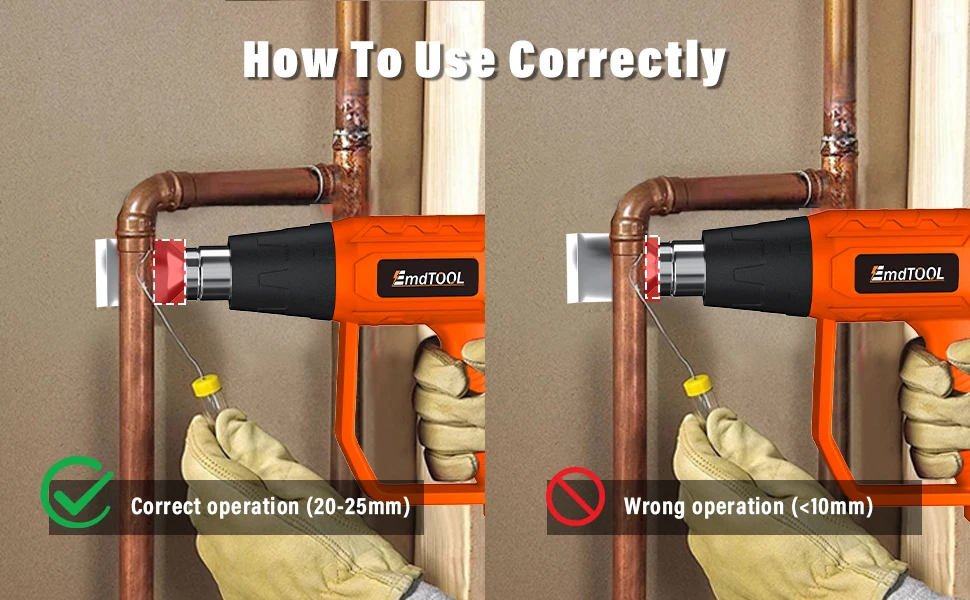
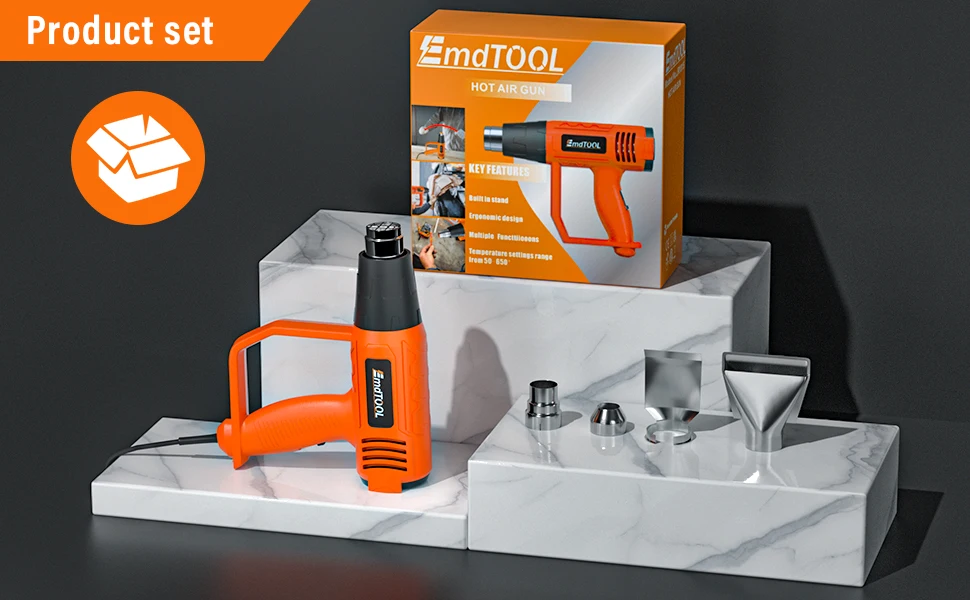
The Thermal Lance includes three nozzles for the three primary heat-gun workflows: a concentrator nozzle for precision stripping and electronics rework, a spreader nozzle for even heat distribution across wide surfaces, and a reflector nozzle for heat-shrink tubing and solder sleeve applications. The ergonomic grip includes an integrated stand that keeps the hot nozzle off the workbench — a safety feature that every heat-gun user discovers the necessity of exactly once, usually the hard way. Overload protection and a grounded 3-prong plug complete the industrial safety package.
This is not a hot-air blower. It is a precision thermal instrument for people who understand that 300 degrees of difference matters.
Key Features
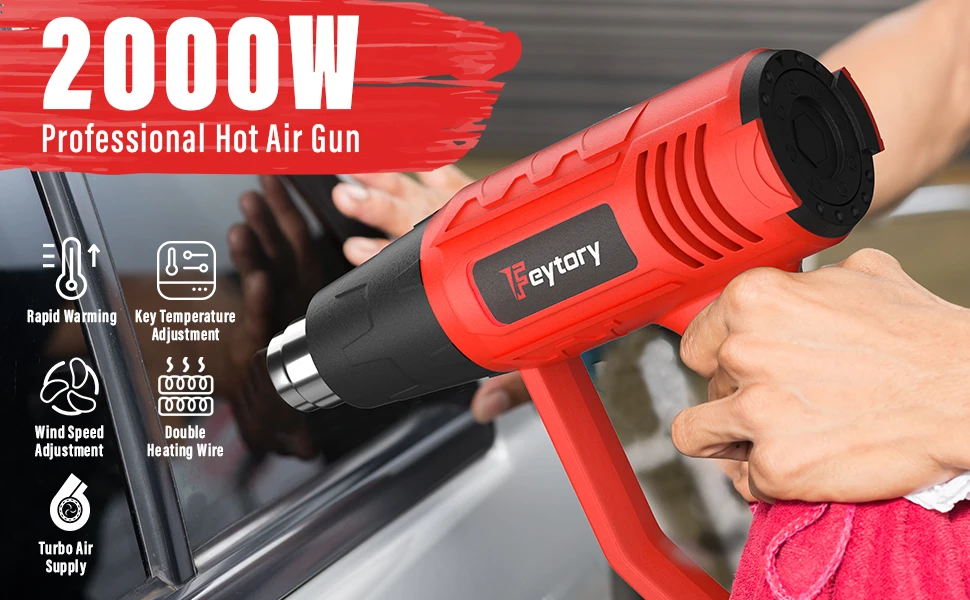
- ✦2000W Industrial-Grade Element: Rapid heat-up to operating temperature in under 90 seconds. Sustained output without the thermal cycling that causes budget heat guns to sag under continuous use.
- ✦Dual Temperature Modes: 300°C (572°F) for controlled material work — paint softening, adhesive activation, plastic bending. 600°C (1112°F) for aggressive removal — paint stripping, solder reflow, seized bolt release.
- ✦Variable Airflow 300-500 L/min: High-volume mode for broad coverage stripping. Low-volume mode for precision electronics and heat-shrink work where excessive airflow disrupts the target.
- ✦3 Interchangeable Nozzles: Concentrator (precision), spreader (broad coverage), and reflector (360° heat-shrink) included. Tool-free nozzle changes — press-fit attachment, no tools required.
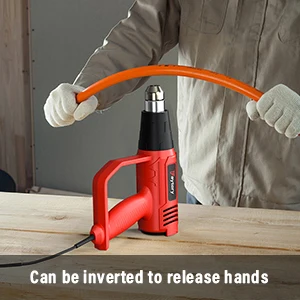
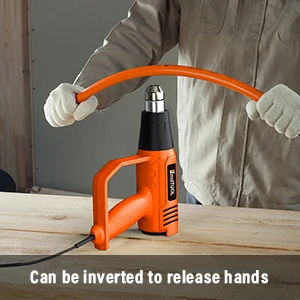
- ✦Integrated Bench Stand: Folding stand keeps the hot nozzle elevated and directed safely away from the work surface. Essential for hands-free operation during two-handed material work.
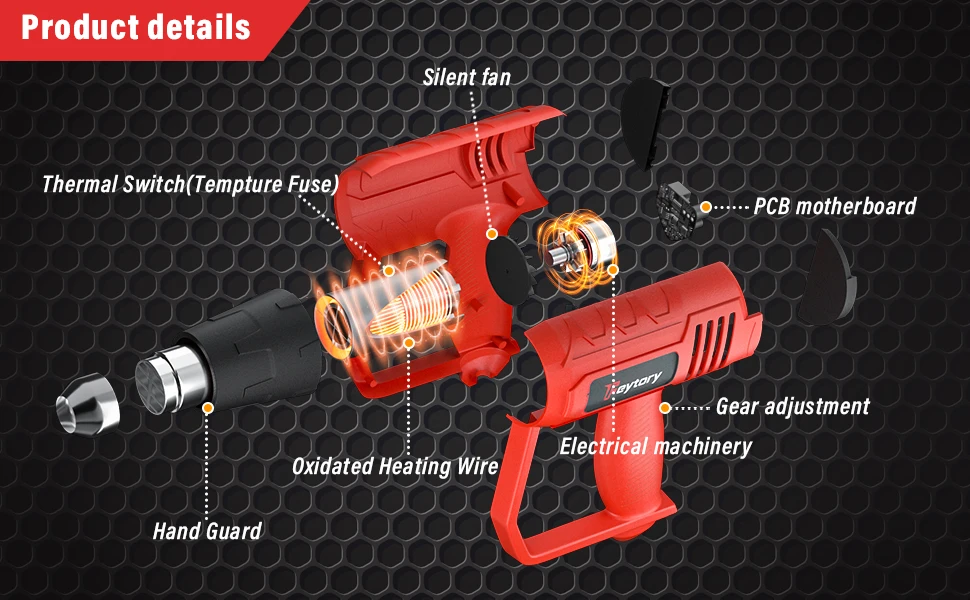
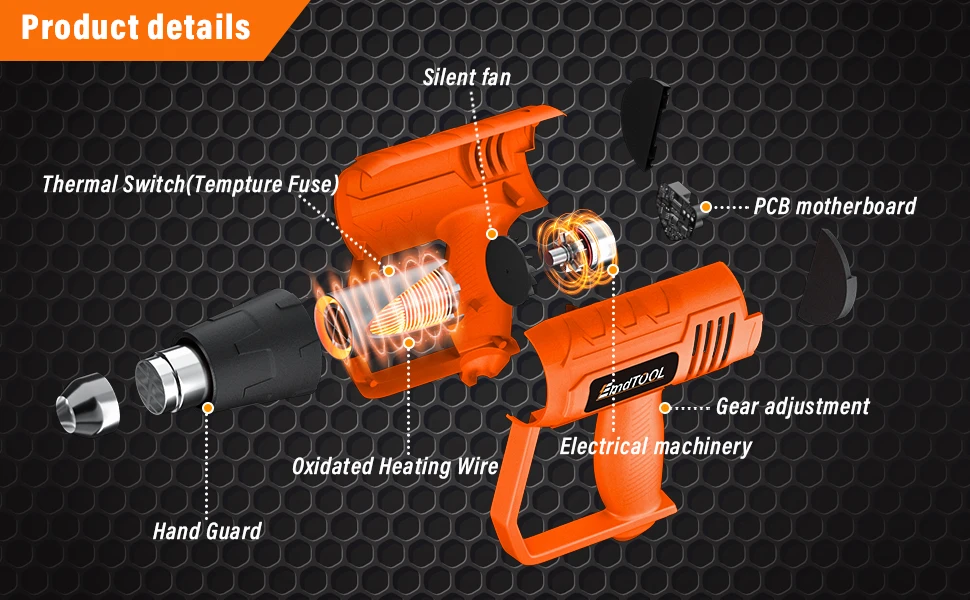
- ✦Overload Protection: Automatic thermal cut-off prevents element burnout from continuous maximum-temperature operation. Resets after cooling — protects both the tool and the workpiece.
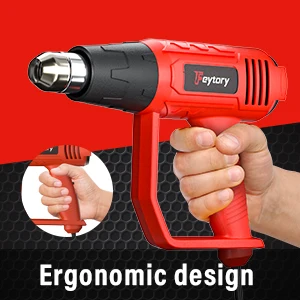
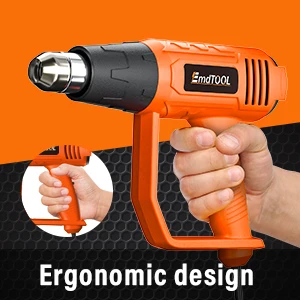
- ✦Ergonomic Grip + Grounded Plug: Contoured handle reduces fatigue during extended stripping sessions. 3-prong grounded plug for electrical safety in workshop environments.
Technical Specifications
- Power Rating: 2000W
- Temperature Settings: 300°C / 600°C (572°F / 1112°F)
- Airflow Volume: 300-500 L/min
- Heat-Up Time: ~90 seconds to operating temperature
- Nozzle System: Tool-free press-fit, 3 nozzles included (concentrator, spreader, reflector)
- Safety Features: Thermal overload protection, grounded 3-prong plug, integrated bench stand
- Housing: High-temperature engineering polymer with ergonomic grip
- Voltage: 220V AC
- Cable Length: 2 meters
- Applications: Paint stripping, heat-shrink tubing, SMD reflow, adhesive removal, plastic welding, vinyl wrap installation, seized bolt release
Application Scenarios
The Thermal Lance spans the workshop spectrum from automotive restoration to electronics assembly. Auto body technicians use the 600°C setting with the spreader nozzle to strip multiple layers of paint from door panels and hoods — a task that consumes hours and chemical stripper waste when done without directed heat. Electronics repair technicians use the 300°C setting with the concentrator nozzle for SMD component reflow, heat-shrink tubing activation, and the careful removal of adhesively bonded smartphone screens. Vinyl wrap installers depend on the controlled 300°C airflow to soften wrap material for compound-curve application without exceeding the polymer's deformation threshold. Plumbers apply heat to frozen pipes and seized compression fittings. Woodworkers use controlled heat to remove veneer and reactivate hide glue on antique furniture restoration projects. DIY homeowners find the Thermal Lance replaces three single-purpose tools: paint stripper, adhesive remover, and the propane torch previously used for tasks that really should not have involved open flame. The integrated stand and overload protection make it the heat gun you leave plugged in, not the one you retrieve from the back of the tool cabinet twice a year.
Frequently Asked Questions
Q: What is the difference between the 300°C and 600°C settings?
A: 300°C is for controlled, precision work — paint softening for scraping, adhesive activation, plastic bending, heat-shrink tubing, and vinyl wrap installation where you need heat without destruction. 600°C is for aggressive removal — stripping multiple paint layers, releasing seized bolts, solder reflow, and applications where maximum thermal energy transfer is the goal.
Q: Can I use this for heat-shrink tubing on electrical work?
A: Yes. Use the reflector nozzle at 300°C for even, 360-degree heat distribution around the tubing. This is one of the tool''s primary design use cases.
Q: How long can I run it continuously at 600°C?
A: The thermal overload protection will cycle the element off if the internal temperature exceeds safe limits during extended maximum-temperature operation. Under typical workshop use (5-15 minute sessions), this should not engage. For continuous stripping work exceeding 20 minutes, allow periodic 2-3 minute cooldowns.
Q: Are replacement nozzles available?
A: The three included nozzles cover the primary heat-gun workflows. Standard 32mm press-fit nozzles from most brands are compatible — the nozzle mount uses the industry-standard diameter.
Q: What voltage does it require?
A: 220V AC with grounded 3-prong plug. This is the standard voltage in Europe, Asia, Australia, and most regions outside North America.
Q: Will the housing get too hot to hold?
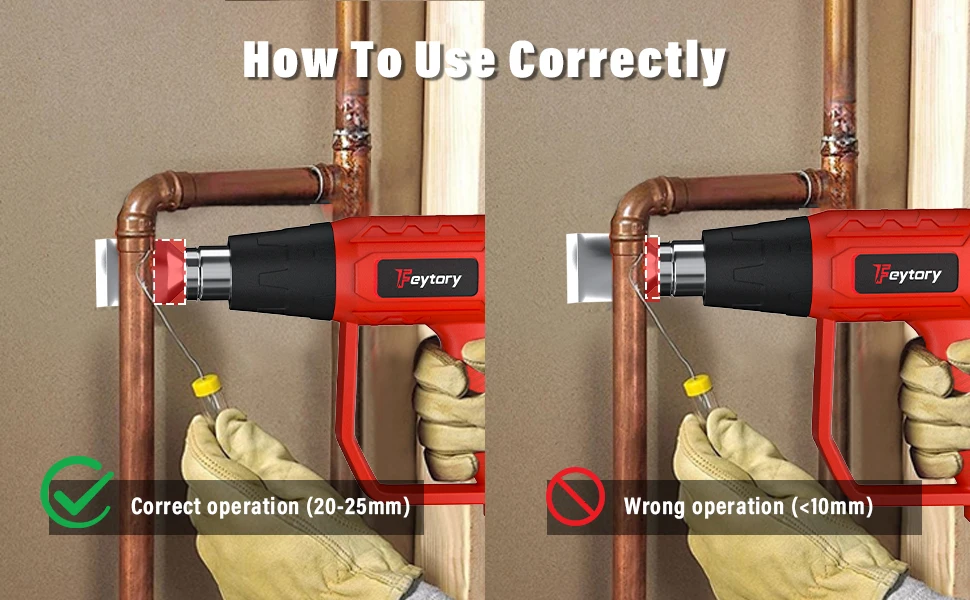
A: The ergonomic grip area remains cool during extended operation. The nozzle and the area immediately behind it become extremely hot — the integrated stand should always be used when placing the tool down.
Q: Can I use it to remove smartphone or tablet screens?
A: Yes. Use the 300°C setting with the concentrator nozzle. Apply heat in 30-second passes around the screen perimeter to soften the adhesive. The controlled temperature prevents LCD damage that a 600°C blast would cause. Always use appropriate ESD-safe tools in conjunction with heat for electronics repair.


Customer Reviews
Payment and Security
Vos informations de paiement sont gérées de manière sécurisée. Nous ne stockons ni ne pouvons récupérer votre numéro de carte bancaire.