


Description
Cleanliness Is Not A State. It Is A Specification.
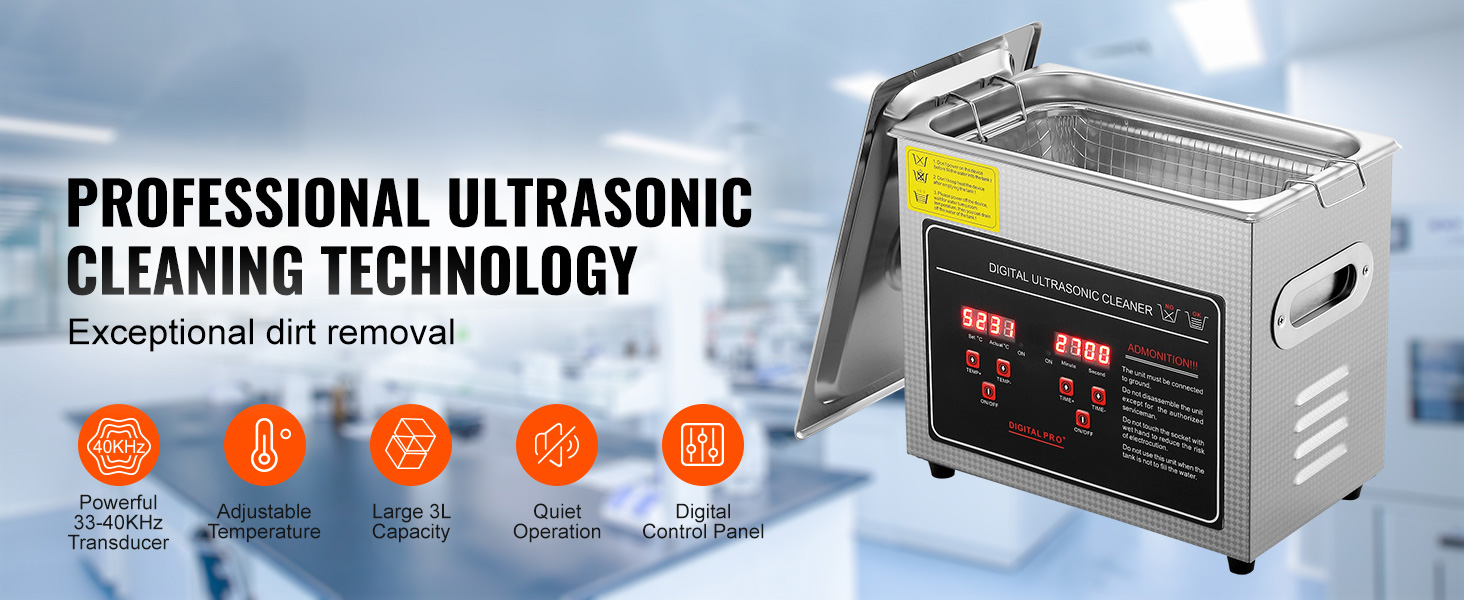
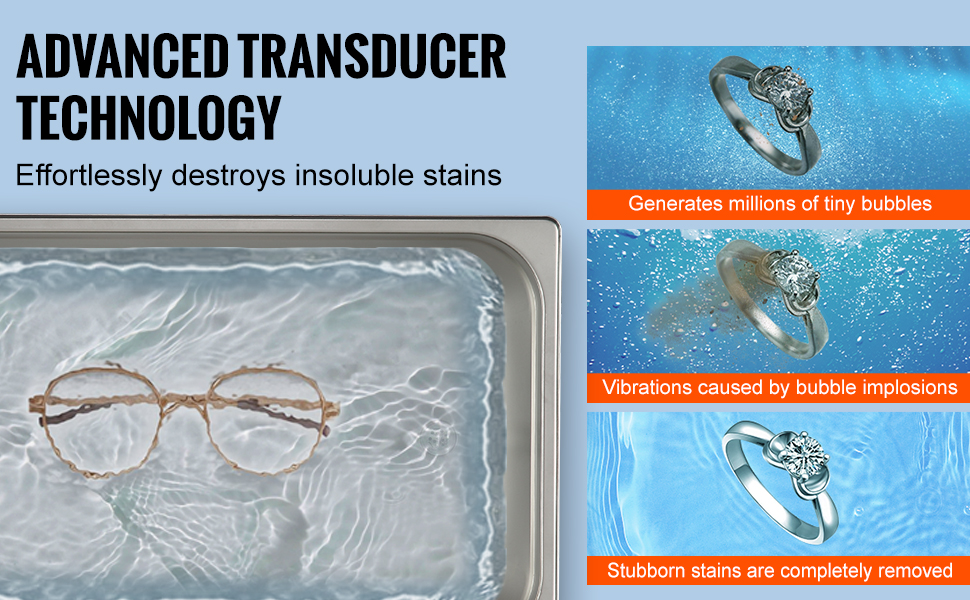
When a dental instrument must be sterile to the micron, when a carburetor's idle circuit must flow fuel without obstruction, when a PCB assembly must present perfectly clean contact pads for soldering — visual inspection is no longer sufficient. The Cavitation Lab ultrasonic cleaner transforms ordinary water and cleaning solution into a high-frequency scrubbing field operating at the molecular scale. Millions of microscopic cavitation bubbles form and collapse with each ultrasonic pulse, generating localized pressure waves that dislodge contaminants from the deepest crevices, blind holes, and internal passages that brushes, cloths, and chemical soaks can never reach. This is precision cleaning as an engineering discipline — not a chore.
Six tank sizes, from a compact 2L bench unit for jewelry and small instrument work to a 30L industrial-capacity bath for engine components and production batches, ensure that the tool scales to the task. The stainless steel tank construction resists corrosion from both aqueous and solvent-based cleaning solutions, while the integrated heater brings the bath to optimal operating temperature — typically 40-60°C — for accelerated degreasing and enhanced cavitation efficiency. A digital timer and temperature display provide repeatable process control, essential when cleaning protocols must be documented and reproduced across shifts or facilities.
The Cavitation Lab is built on the SucceBuy platform, a brand that has earned its place in professional workshops, dental labs, jewelry studios, and electronics rework stations worldwide. The ultrasonic transducer array is bonded to the tank floor with industrial-grade adhesive — not pressed or clamped — ensuring consistent energy transfer across the entire bath volume. This attention to transducer coupling is what separates laboratory-grade cleaners from consumer gadgets that produce uneven cleaning patterns and dead zones.
This is not a cleaning tub. It is a cavitation reactor that restores components to their as-manufactured surface condition.
Key Features
- ✦ 6 Tank Capacities: 2L, 3L, 6L, 10L, 22L, 30L — from benchtop jewelry cleaning to industrial batch processing
- ✦ Integrated Heater: Accelerates degreasing and improves cavitation efficiency at 40-60°C operating temperature
- ✦ Industrial-Grade Transducer Bonding: Transducers are adhesive-bonded to the tank floor for uniform energy distribution — no dead zones
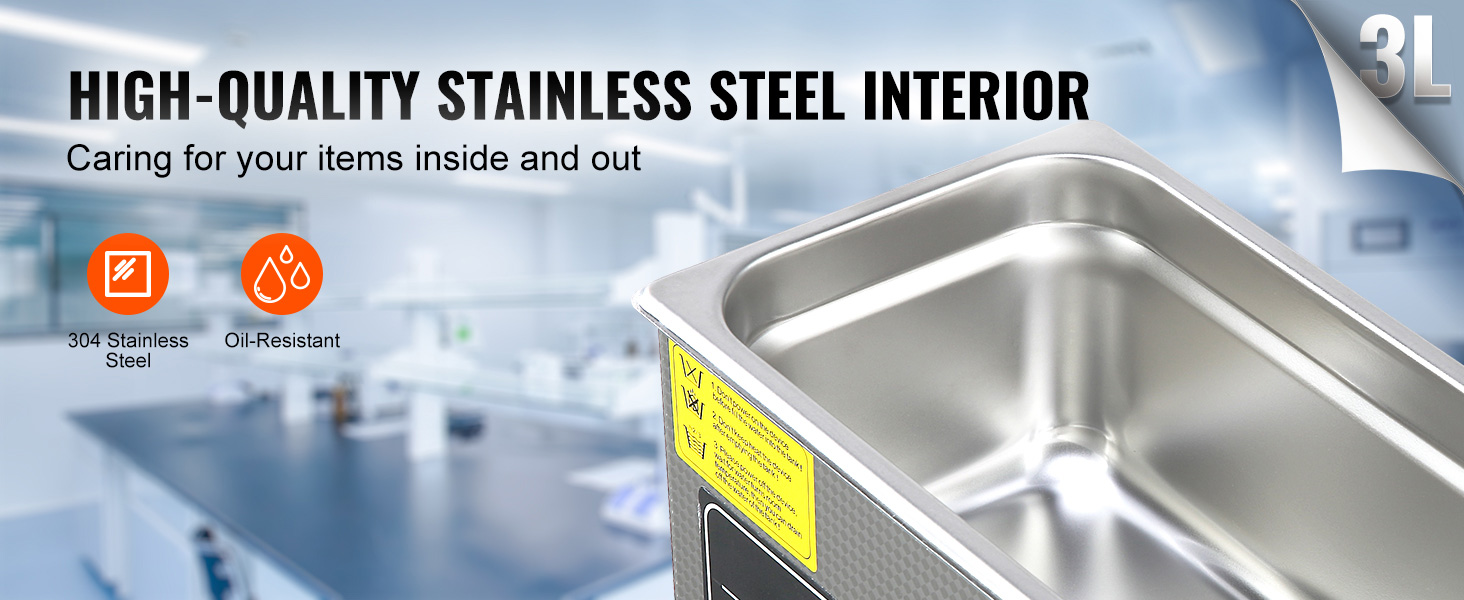
- ✦ 316L Stainless Steel Tank: Corrosion-resistant to aqueous detergents, mild solvents, and enzymatic cleaners
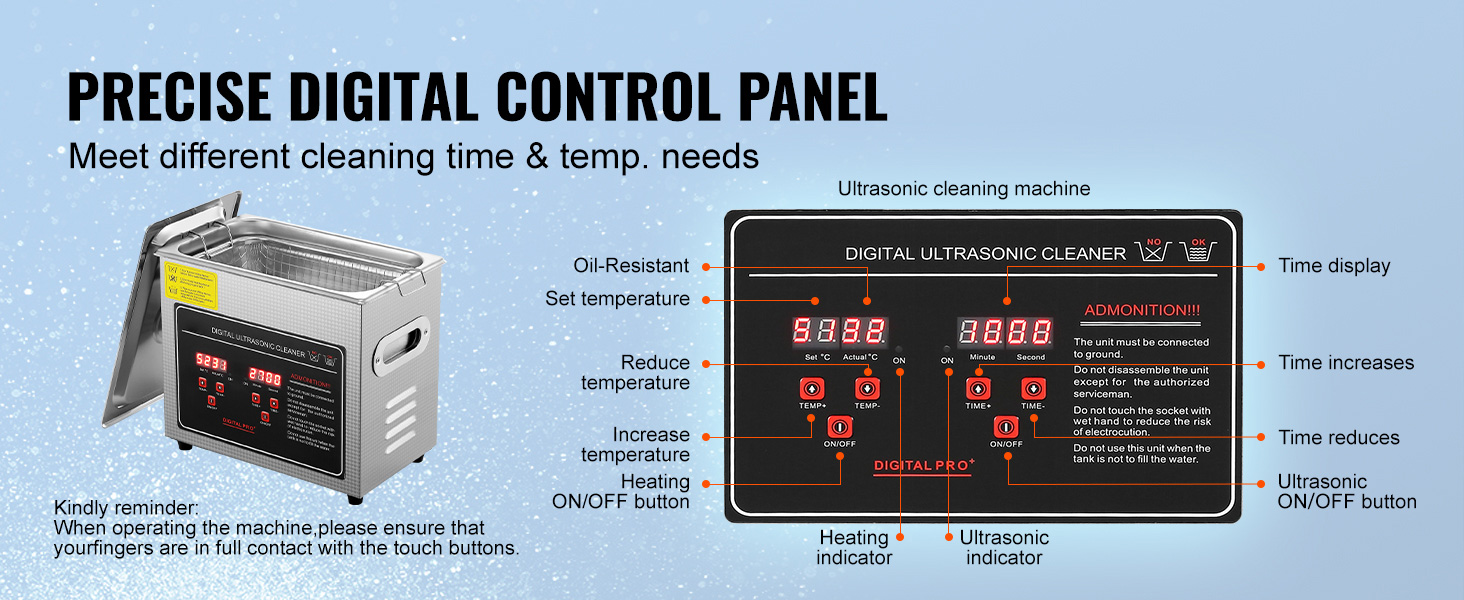
- ✦ Digital Timer & Temperature Control: Repeatable process parameters for documented cleaning protocols
- ✦ Drain Valve (22L/30L models): Convenient solution changes without lifting a full tank
- ✦ Quiet Operation: Sweep-frequency technology minimizes standing waves and reduces audible noise
Technical Specifications
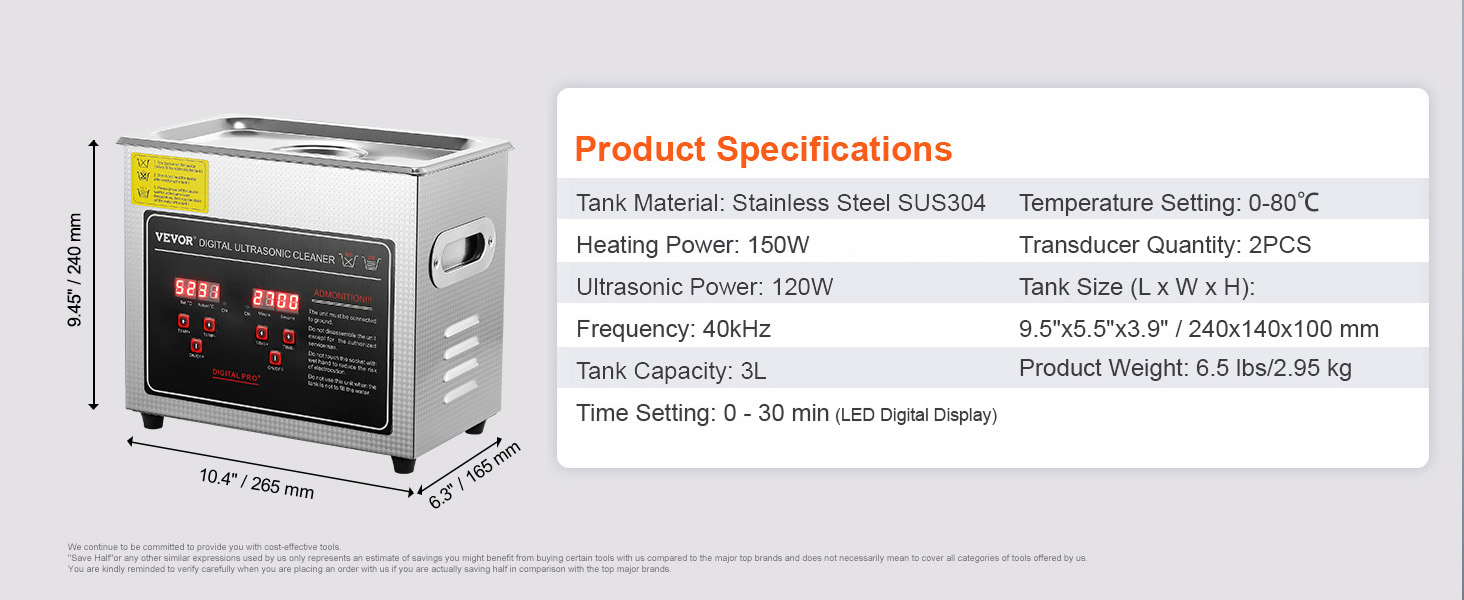
- Ultrasonic Frequency: 40kHz — optimal for general precision cleaning
- Tank Material: 316L Stainless Steel
- Tank Capacities: 2L / 3L / 6L / 10L / 22L / 30L
- Heating Range: Ambient to 80°C (176°F)
- Timer Range: 1-99 minutes, digital control
- Transducer Configuration: Bottom-mounted, adhesive-bonded array
- Power Supply: 110V/60Hz (US standard)
- Drain Valve: Included on 22L and 30L models
- Accessories Included: Stainless steel basket, lid/cover
- Applications: Jewelry, dental tools, lab glassware, PCB, carburetors, injectors, surgical instruments
Application Scenarios
Dental and medical practices rely on the Cavitation Lab for pre-sterilization cleaning of hand instruments, burs, and impression trays — removing bioburden that autoclaves cannot address alone. Jewelry studios and pawn shops use the smaller 2L-6L units to restore brilliance to gold, silver, and gemstone settings without abrasive polishing compounds. Automotive and powersports technicians run the 22L-30L tanks for carburetor bodies, fuel injectors, and small engine components where solvent soaks fail to clear micro-passages. Electronics repair benches keep a 6L unit loaded with PCB-specific cleaning solution for flux removal and post-rework board cleaning. Manufacturing QC labs use the heated function for accelerated degreasing of machined parts prior to dimensional inspection.
Frequently Asked Questions
Q: What cleaning solutions can I use?
A: The 316L stainless steel tank is compatible with water-based detergents, mild alkaline solutions, enzymatic cleaners, and most commercial ultrasonic cleaning concentrates. Avoid strong acids (hydrochloric, sulfuric) and chlorinated solvents which can pit stainless steel over extended exposure. For jewelry, a few drops of mild dish soap in warm water is often sufficient.
Q: How long does a typical cleaning cycle take?
A: Light cleaning (dust, fingerprints, light oils) typically completes in 3-5 minutes. Moderate contamination (tarnished jewelry, flux residues) requires 5-15 minutes. Heavy degreasing (carburetor bodies, engine parts) may need 20-30 minutes with heated solution. The digital timer allows you to dial in the exact duration for repeatable results.
Q: Can I clean electronic circuit boards?
A: Yes — the Cavitation Lab is widely used for PCB cleaning. Use a specialized electronics cleaning solution and ensure the board is thoroughly dried (compressed air or low-temperature oven at 60°C for 30 minutes) before applying power. Remove any batteries, speakers, or unsealed components first.
Q: Is the drain valve standard on all sizes?
A: The drain valve is included on the 22L and 30L models. The 2L-10L tanks are light enough to lift and pour manually; a drain valve on smaller tanks would add unnecessary cost without meaningful convenience benefit.
Q: How do I select the right tank size?
A: Measure the largest item you will clean regularly and add 2-3 inches of clearance on each dimension. For jewelry, watches, and small precision parts, 2L-3L is sufficient. Dental tools and PCB boards: 6L. Carburetors and cylinder heads: 10L-22L. Batch processing and production environments: 30L. The 30L model can accommodate an entire V8 intake manifold.




Customer Reviews
Payment and Security
Your payment information is processed securely. We do not store credit card details nor have access to your credit card information.